The Introduction
So, I really think that cooking a steak without a grill outside or a gas stove inside is just plain stupid. On television, the hosts of cooking shows make us aspire to cook just like they do, but then when we try to recreate their delectable dishes, there are at least 5 things we have to do differently- and this is usually due to a difference in ingredient availability and equipment. Being creative with your differences in equipment and ingredients can help. Sometimes this even produces something more delicious than previously thought; however, when you want to feed friends or family, improvisations and creativity don't always produce consumable cuisines.

So, now I want to talk about a problem- electric stoves and steaks.
Maybe this is more of a challenge than a problem, but if you are accustomed to having a grill or a gas stove, this can be a miserable experience.
Sure, I have a grill, but when I want a good meal and I don't want to dedicate an entire night to cooking, there has to be a quicker, more practical way to cooking a good steak with a stupid electric (coiled) stove. So, here is
my solution: cast iron. It's cheap, it transfers heat evenly even on an electric stove, and it can go into the oven. Pictured to the right is an old picture of my trusted skillet with a stuffed and roasted green pepper.
My well-seasoned medium sized cast iron skillet works great for two small steaks. I discourage using any oil or butter when cooking a steak in the iron skillet because it ruins good things (like good ingredients) too often. If it is well-seasoned, you simply don't need it. And PS- never good steaks on the George Foreman.
Proteins and various starches compliment each other really well- a juicy steak and a potato. And while the potato is a classic high starch option (in its various forms), I'm pretty convinced pairing is a bit overrated now. Personally, I can't stand plain old potatoes with my steak anymore,

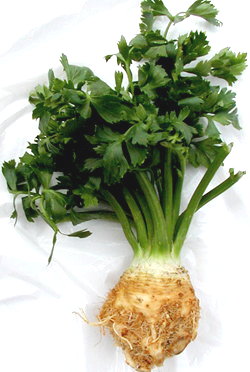
and since potatoes are such a low vitamin, high starch root vegetable, I can't justify eating them anymore. My solution: celeriac. Celeriac is a tasty alternative to potatoes and with a starch content of only 5 to 6 percent, you don't have to feel bad about eating it. More about this later.
So, I'm pretty convinced that root vegetables go really well with steak. I love root vegetables. My wife loves root vegetables. And I love my wife. Thus, I like to serve various root vegetables with steaks now, and the variations you can make are endless. Pictured here are two celeriac roots, two japanese white radishes, and a turnip.
First, The Steaks:
So, 1). I heat it up over the course of about 5-10 minutes (varies by stove) to about the 7 or 8 setting. I say 7 or 8 over 5 to 10 minutes because my coils often have only two settings: warm or burn- but taking the time to heat it up slowly usually takes care of any of those problems. At the same time, I preheat my fickle electric oven to 425.
In terms of a marinade (2), I like to keep it simple. Here's one that I've tried that is fairly basis; however, mine is usually a variation that includes just a little fresh garlic and a lot of fresh cracked peppercorns. Mine works really well for me because I often don't have two hours to wait (10 hours even better) with a marinade, so I usually include the cracked peppercorn to turn it into a basic rub. It makes a nice little crust after searing and creates a good base for a sauce. Notice the marinade doesn't include an oil.
(3) I sear those steaks really fine. I throw them in and listen to the sizzle. Two and 1/2 minutes on each side, just letting the skillet do all the work. Nothing else.
Then, without delay I throw them in the oven (4), and finish them off to my favorite doneness. At 425
(which is probably closer to 440 in my oven), it usually takes about 4 minutes for medium well (my wife's liking), and for myself, about 2 minutes (medium rare).
After I take the skillet out, I always (5) let the steaks rest for 3 minutes on a plate, covered with foil. While that is happening, move on to the sauce.
----
Then, The Sauce:
While the steaks are resting, I return the skillet to the stovetop and throw the heat back up to about medium-high. I scrape that skillet until all that crusty, gooey, and black mess has come up off the bottom. At this point, I either have to decide I'm going to make a gravy or a sauce. I usually lean toward the gravy when I serve root vegetables. So for that I add about 2-4 tablespoons of flour and make a roux. Then, I take the juices that have come off the rested steaks (from the plate) and add them to skillet. If there aren't enough juices I sometimes supplement with beef bullion, but I usually add a little water to thin everything out. Salt and/or pepper to taste, but I never usually need either if I'm using my cracked peppercorn marinade.
--
Finally, The Root Vegetable Mash
1 Large Carrot
2 "carrot style" parsnips
1-2 cloves garlic
1/2 Stick of Butter
Salt and Pepper to taste
Again, I think celeriac root is fantastic. Has the essence of celery, but it mashes really well and it has some nutty and earthy undertones. It stores for over a month in the fridge, and the stalks can be used to garnish Bloody Mary's. And in this recipe, the parsnips can really bring out some crazy good flavors from the celeriac without overpowering it.
So, the mash is a simple process:
Clean the celeriac as directed. Dice it, along with the other vegetables. Boil the celeriac for 5 minutes in salted water, then add the other vegetables. Cook for 5 more minutes. Drain. Mash. Add minced garlic. Add 1/2 stick of butter to help things along (if desired). Salt & Pepper to taste, and serve with the steak gravy.
---
The Results

Note: Steak pictured does not reflect full recipe above (no marinade).


No comments:
Post a Comment